
Mabuchi Motor aims to quickly increase ROIC and ROE by maximizing returns through the growth of its business and improving capital efficiency.
As Financial Indicators for Management Plan 2030 Guidance, we have set targets of 300 billion yen in sales, an operating income ratio of 15% or higher, ROIC of 12% or higher, and ROE of 10% or higher, and strive to achieve them.
Action to implement management that is conscious of cost of capital and stock price
Initiatives to Improve Profitability and Capital Efficiency
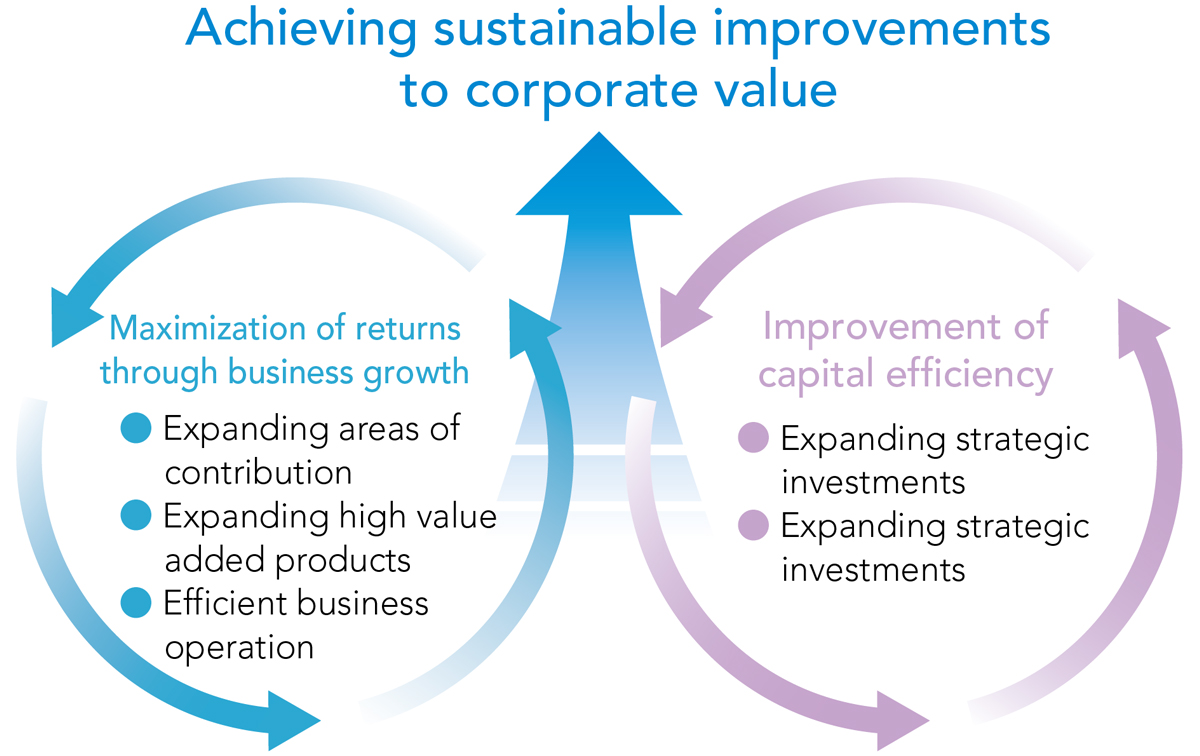
Toward Early Achievement of ROE of 10% or Higher by 2030
Maximizing Returns
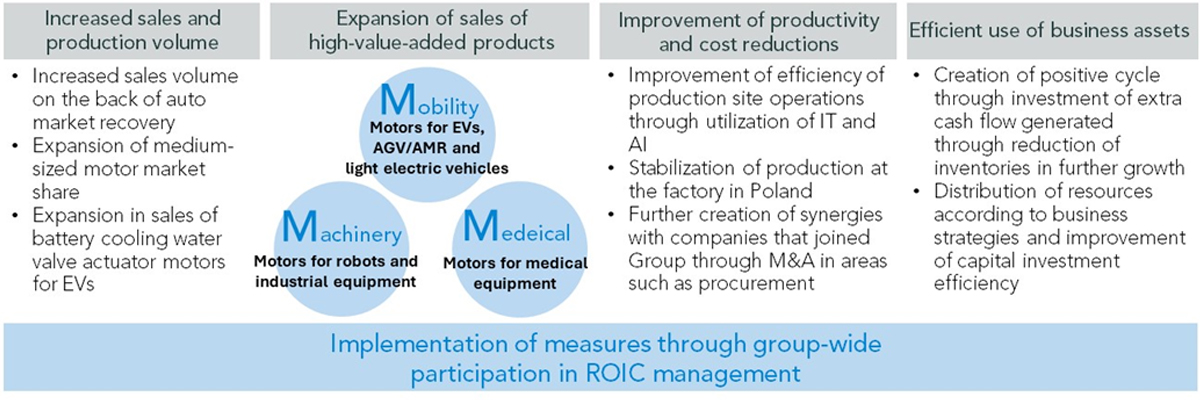
To achieve an ROE of 10% or higher as early as possible, we are expanding our business scope to maximize returns. Our business activities are focused on providing the diverse motion solutions that our customers and society need. With the aim of delivering a wide range of “motion” beyond rotation, we will pursue M&A and other opportunities as part of our proactive investment in growth. We have earmarked ¥70–80 billion for strategic investments over the period from 2024 to 2030.
We are also implementing a range of efficiency improvement measures to raise operating profit margins across the Group, including subsidiaries acquired through M&A. We are promoting ROIC-focused management involving all employees. In addition to reducing product inventories, each site and department is establishing and implementing initiatives and KPIs to improve ROIC.
Enhancing Shareholder Returns
Dividend calculation standard
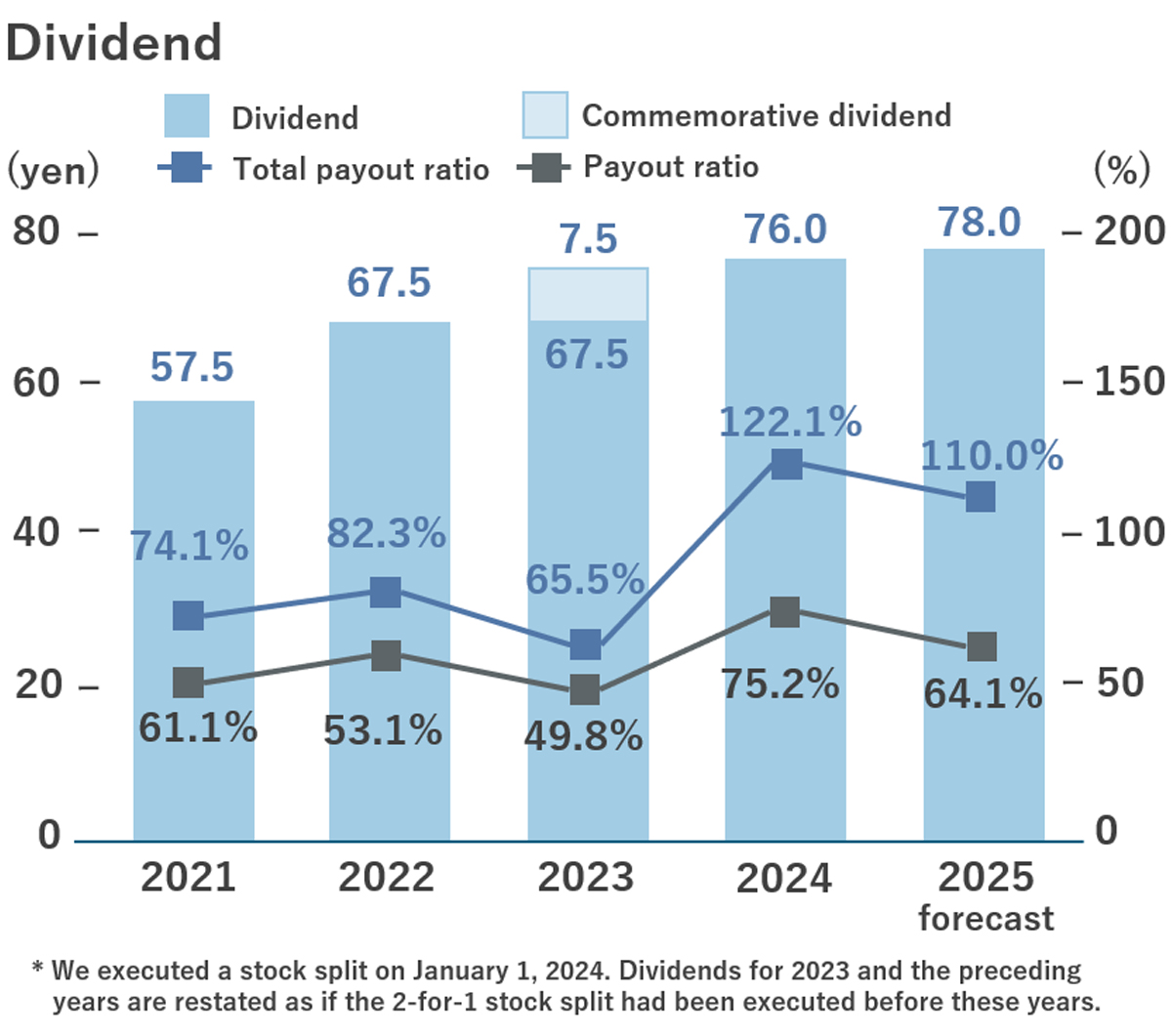
In order to achieve long-term stable dividends, we have adopted “Dividend on Equity (DOE)” as an indicator for calculating dividend amounts, and has decided to determine dividend amounts with reference to a Dividend on Equity (DOE) ratio of 3.0% to 5.0%.
From the perspective of improving capital efficiency, we will maintain a progressive dividend policy as its basic approach through 2030. Furthermore, when the Return on Equity (ROE) or the Price-to-Book Ratio (PBR) falls below a certain threshold, dividends will be paid based on a DOE of 5%, thereby further strengthening shareholder returns.
Total payout ratio
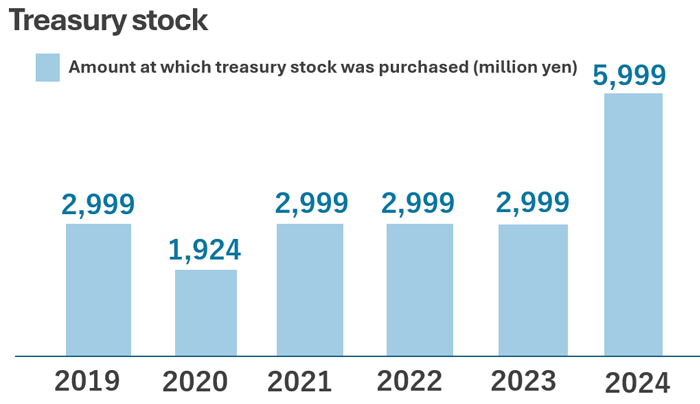
We will carry out share repurchases targeting a total payout ratio of 100% on a cumulative basis over the five-year period from 2026 to 2030.
Approach to Cash Allocation
Cash provided by business activities will be used in activities that have been prioritized in the following order. The first priority will be investments for the organic growth of existing businesses and the funding of growth investments in new areas (including M&A investments). The next priority will be funds for the payment of dividends based on our dividend policy.
Regarding the cash remaining after the above, we will consider the portion exceeding the necessary funds as calculated independently as a way to possibly augment shareholder returns (purchase of treasury stock, etc.) without excessively accumulating cash.
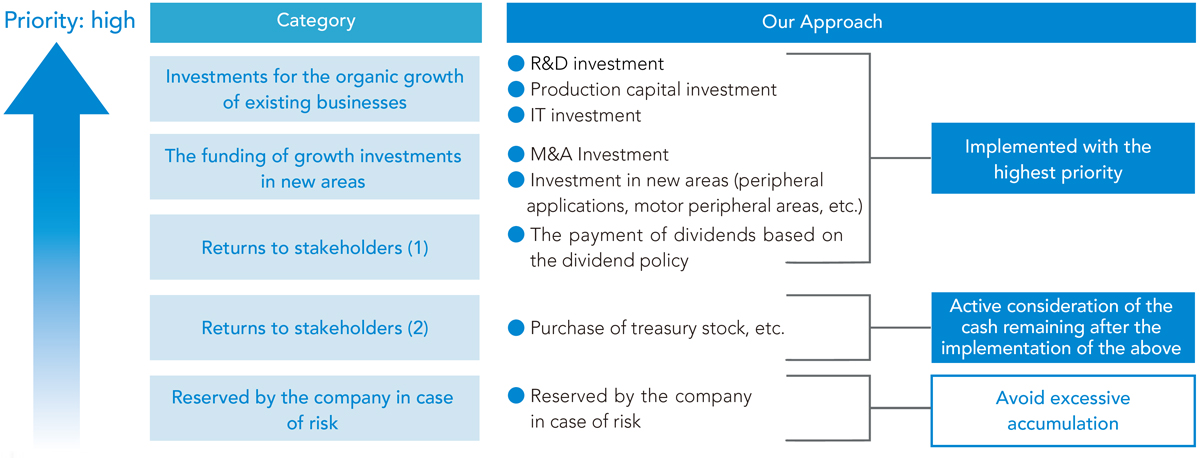
Basic Approach to Securing Funds
In the short span of around a decade, the world has faced multiple crises, including the pandemic and heightened geopolitical risks, further underscoring the need to be prepared for situations that have the potential to shake the very foundations of corporate management. Moreover, in recent years, it has become essential that we address social issues such as the environmental impact of climate change and the protection of human rights, including in the supply chain. At Mabuchi Motor, always believing that companies are public institutions and must last forever to fulfill their duty to contribute to society, we have set a Long-Term Management Policy, “Continue and expand our contribution to the happiness of all stakeholders.” We have secured the necessary funds and built a solid management foundation to realize this goal. Our approach to this goal is as shown on the below.
Necessary funds
As the size of the business grows, the required funds will increase accordingly, and we always reasonably consider and calculate the funds that will be necessary.
